DESIGN OF THE YEAR 2025
School of Tomorrow
Kinetic Singapore
CONTACT
[email protected]
Do you know your cassava plastic from your beeswax? How about the real-world applications of dog fur, or your personal carbon footprint measured in tonnes of CO2 per year? You would if you attended School of Tomorrow – a sustainability exhibition like no other.
Commissioned for Singapore Design Week 2023, designed by Kinetic Singapore (Kinetic), and first staged at Selegie Arts Centre, this unconventional exhibition introduced visitors to critical environmental issues through a school setting with classes spanning 10 subjects. From the sciences to the humanities, social studies to home economics, each class was given a surprising sustainability twist.
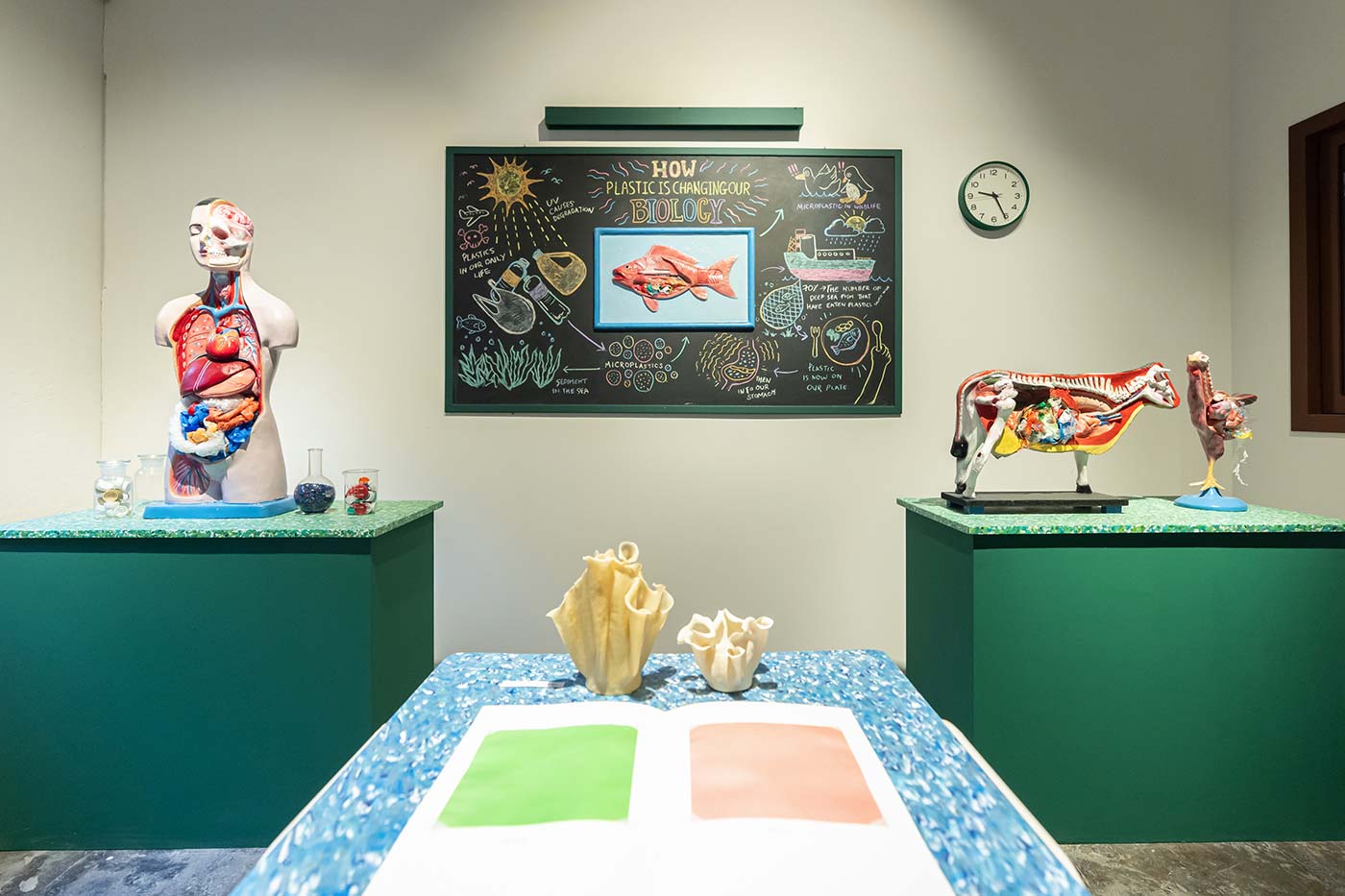
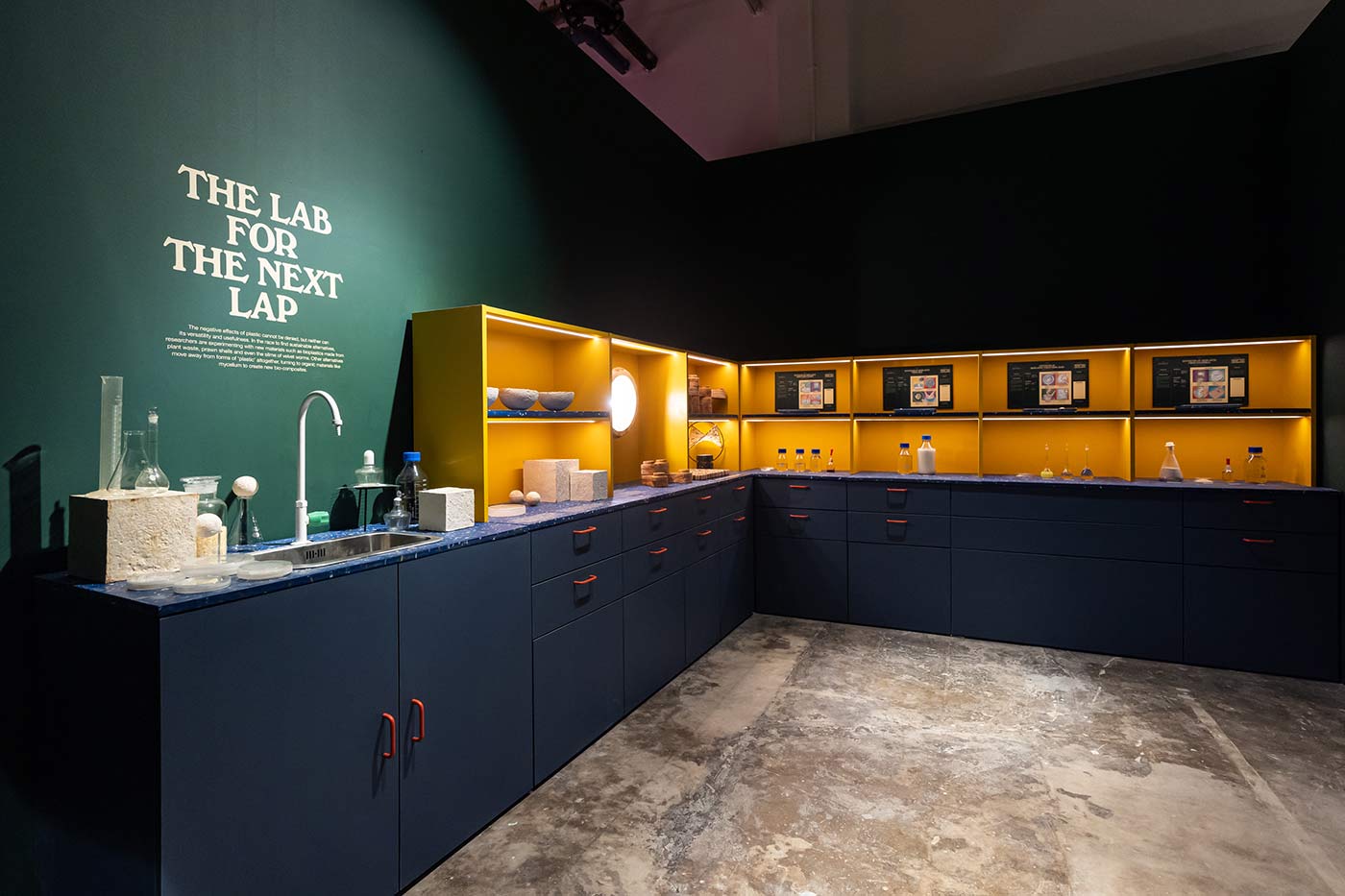
To combat the fatigue and overwhelm that can arise from discussions of sustainability, School of Tomorrow presented both the issues and a variety of positive responses from around the world. Traditional education tools and materials were replaced with sustainable alternatives. Bioplastics abounded in the biology classroom. A skateboard made from salvaged fishing nets sat in the physical education lockers. Mycelium made an appearance in the science lab.
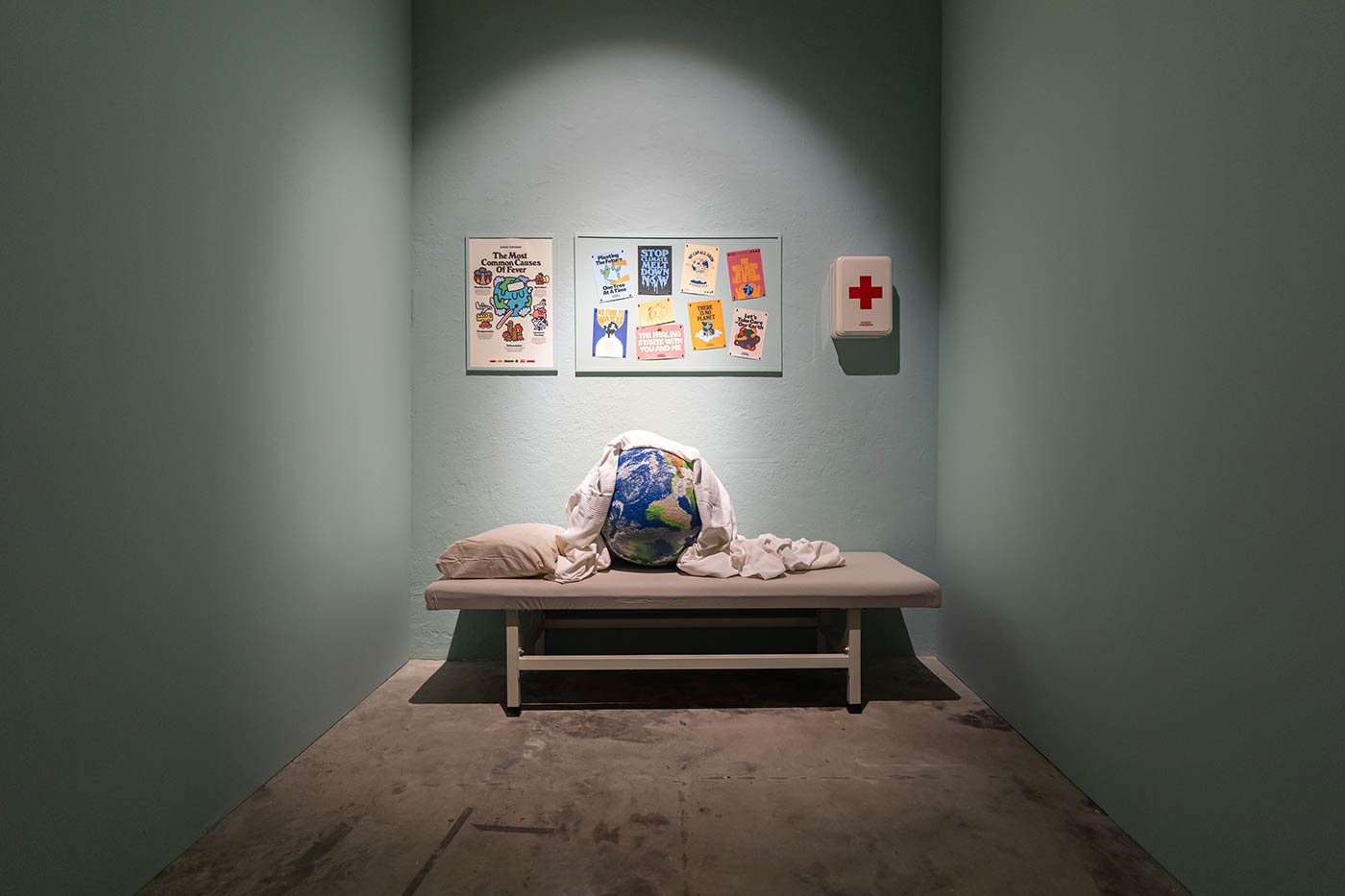
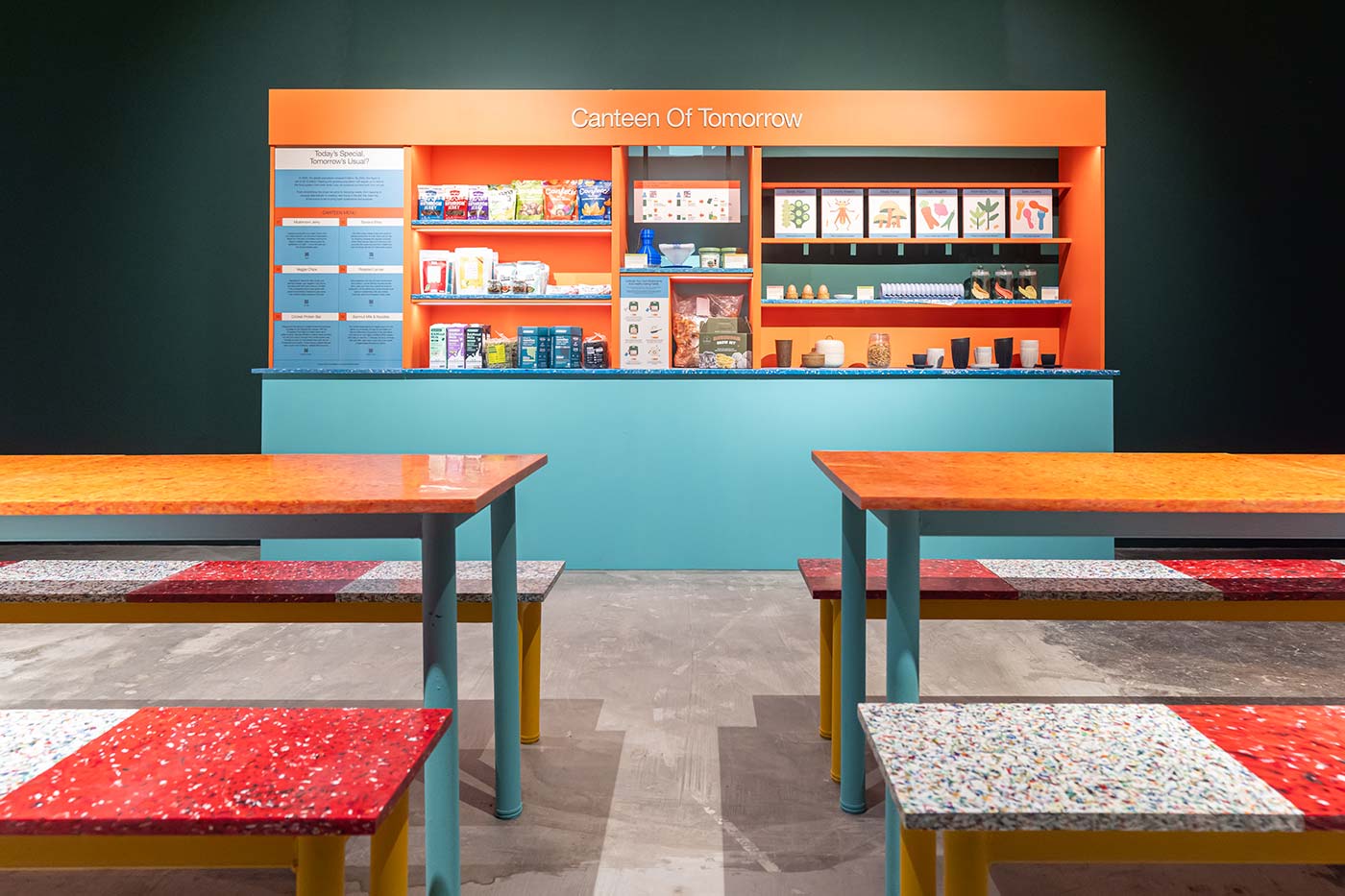
The nostalgic school setting and engaging approach were critical to the strategy of inviting visitors to explore, rather than be dictated to or spoon-fed. The experience encompassed the entire building, complete with areas such as a library and a sick bay where “Earth” convalesced. Gallery ushers wore the school uniform and snacks, including cricket protein bars, were displayed on the canteen shelves.
Internalising the lessons, as the team at Kinetic realised, is the most effective way to make them stick. As such, School of Tomorrow encouraged a thorough immersion in the school experience. The metic-ulously crafted setting and programme were given as much thought and attention as the important content presented in the exhibition.
The high visitorship and social media engagement numbers were followed by numerous local and international enquiries about spin-off showcases, and the exhibition eventually enjoyed a second run in Singapore in 2024. School of Tomorrow attracted visitors of all ages, including preschoolers, and demonstrated that even the most difficult subjects can find resonance.
About the Designer
Of all the adjectives to describe Kinetic Singapore, “indie” would probably sum them up best. It reflects not only their status as a fully independent creative agency but also their quirky house style. Their refusal to be boxed in sees their work span design and advertising, digital and events, and even retail and curatorial. They firmly believe in the power of surprise.
A fierce champion of the local, Kinetic has put the “little red dot” on the global design stage with over 500 awards and counting. Over the past 26 years, they have also been invited to judge at prestigious creative shows such as the D&AD Awards, Clio Awards, Webby Awards, Effie Awards, and the Singapore Creative Circle Awards. Above all, the agency counts their recognition in the P*DA (2013, 2015, and 2020) as the highlights of their story.
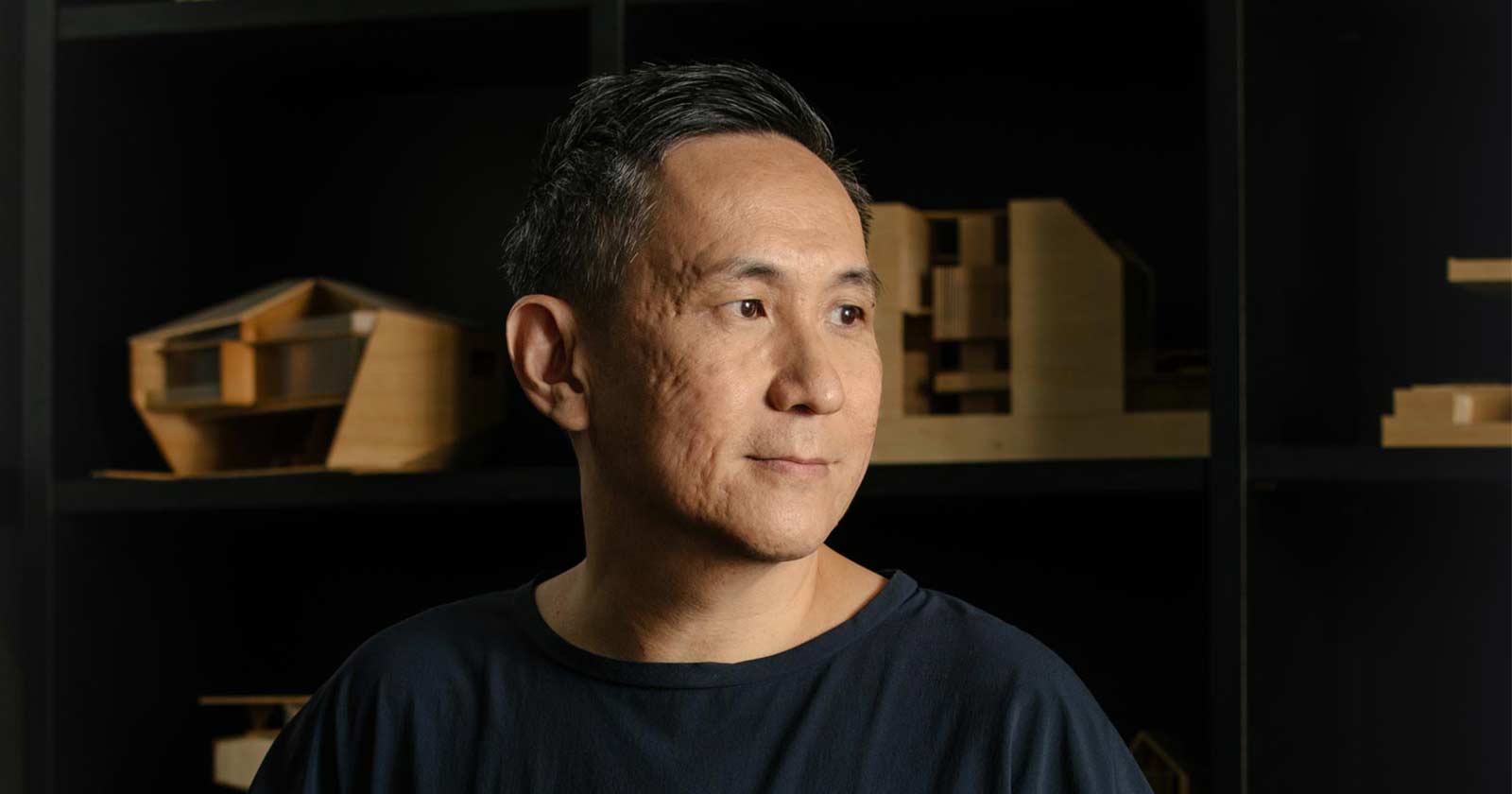
Pann Lim is the Co-founder and Creative Director of Kinetic. He is a firm believer that design without an idea is a sin. Under hisleadership, Kinetic was ranked fifth best design agency in the world by D&AD in 2022.
Gian Jonathan and Astri Nursalim are Partners at Kinetic.
Jonathan has helped shape some of the studio’s most distinctive work, from branding and campaigns to activations and experiences. His work has been recognised internationally in the D&AD Awards, The One Show, and Cannes Lions Awards.
Nursalim has worked on projects ranging from design and advertising, to social and branding, to the spatial and experiential. Her work has received recognition at international creative shows including the D&AD Awards, Cannes Lions Awards, The One Show, Young Guns, and Tokyo Type Directors Club. She has also been recognised as Best Young Designer and Best Young Art Director at The Gong Show.
DESIGNER
Kinetic Singapore
Gian Jonathan, Astri Nursalim, Pann Lim, Catherine Phua, Steven Koswara, Norman Tan, Creshelle Padilla, Leng Soh, Fely Anne Ang, Gracia Lim, Bani Zafran, Lyla Soh, Shaun Vladimir Lee, Olivia Chan, Chunyong Tan, Francesca Fernandez, Jaey Sim
CLIENT
DesignSingapore Council
PROGRAMMER
Aditi Neti
DESIGNER
Kinetic Singapore
Gian Jonathan, Astri Nursalim, Pann Lim, Catherine Phua, Steven Koswara, Norman Tan, Creshelle Padilla, Leng Soh, Fely Anne Ang, Gracia Lim, Bani Zafran, Lyla Soh, Shaun Vladimir Lee, Olivia Chan, Chunyong Tan, Francesca Fernandez, Jaey Sim
CLIENT
DesignSingapore Council
PROGRAMMER
Aditi Neti
 1
1
 2
2
 3
3
 4
4
 5
5
 6
6
 7
7
 8
8
 9
9
 10
10
 11
11
 12
12
1AN IMMERSIVE EXPERIENCE
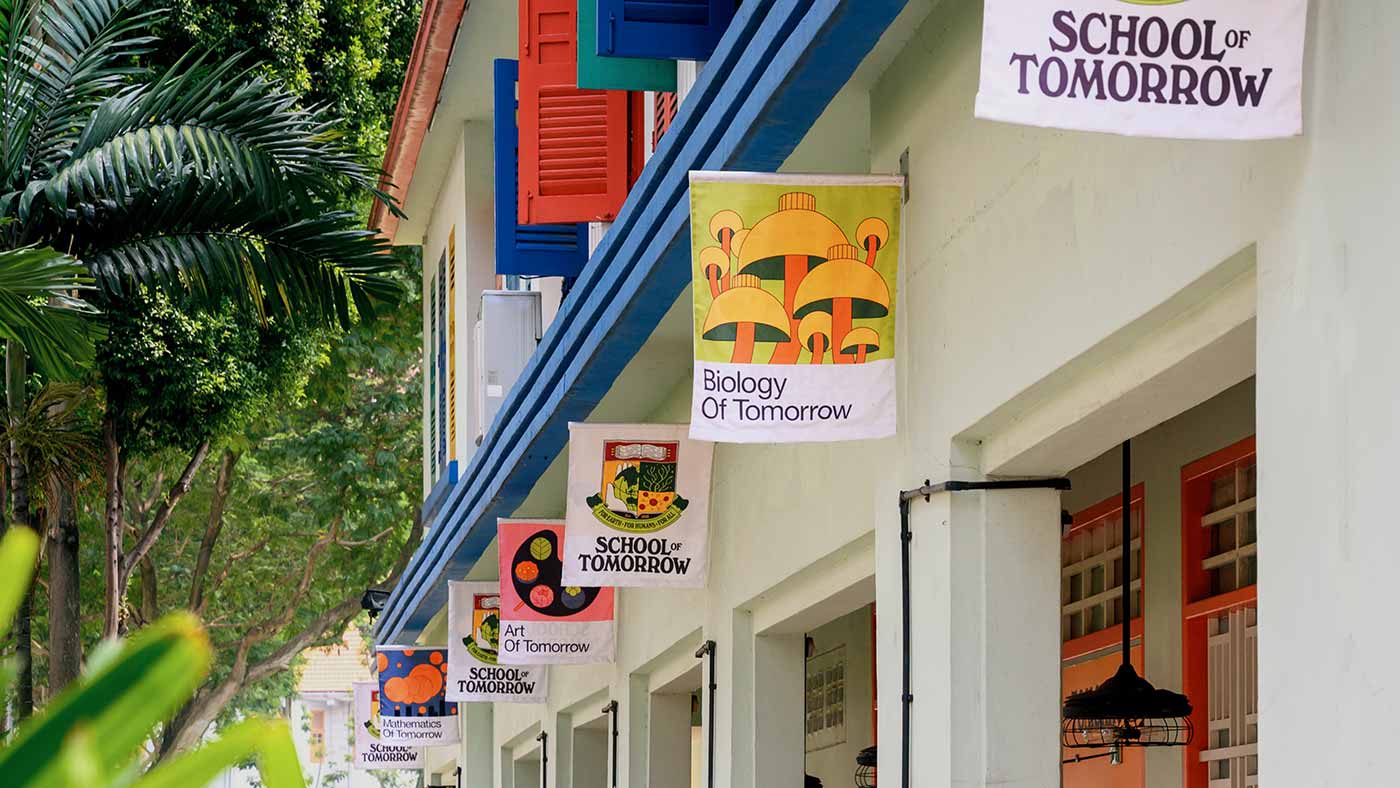
For its maiden run, School of Tomorrow transformed Selegie Arts Centre inside and out. School and class banners brought the spirit of the exhibition to the footpath and hinted at its content.
2ELEMENTS OF WASTE
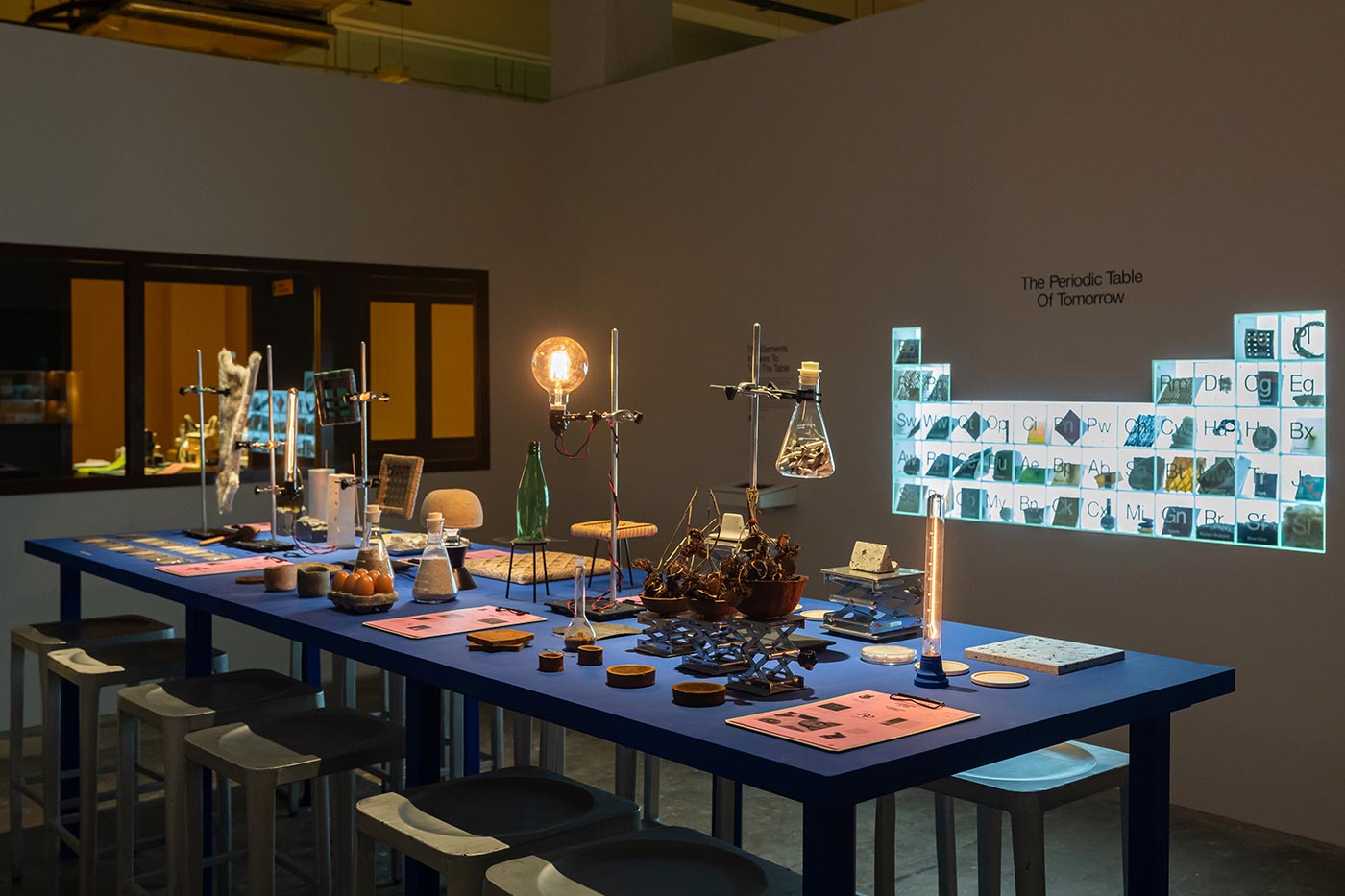
The chemistry lab featured “The Periodic Table of Tomorrow” and presented 45 new elements that encouraged a rethinking of waste streams. Among the elements were “Ha” (Human Hair), “Tr” (Tree Bark), and “Df” (Dog Fur).
3CHAMPIONING CHANGE
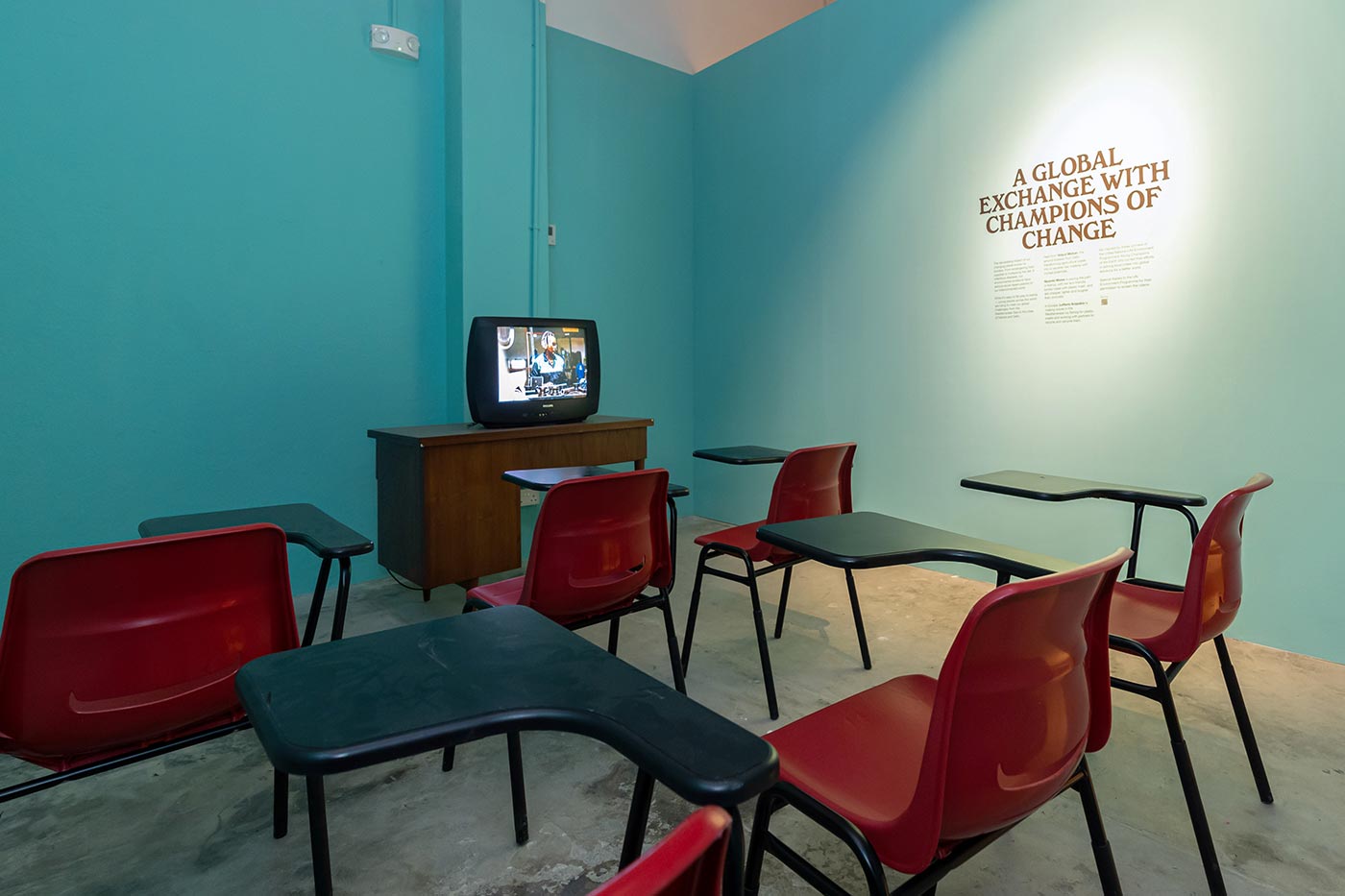
In the social studies classroom, attention was focused on a television that played videos from the United Nations Environment Programme. They featured young champions of the environment and their activities around the world.
4THE PLASTIC PROBLEM
Biology class was a lesson in plastic pollution. Anatomical models stuffed with plastic waste referenced the impact on human and animal bodies through contaminated food chains. Eco-friendly alternatives were displayed on desks.
5CREATIVITY IN COLOUR
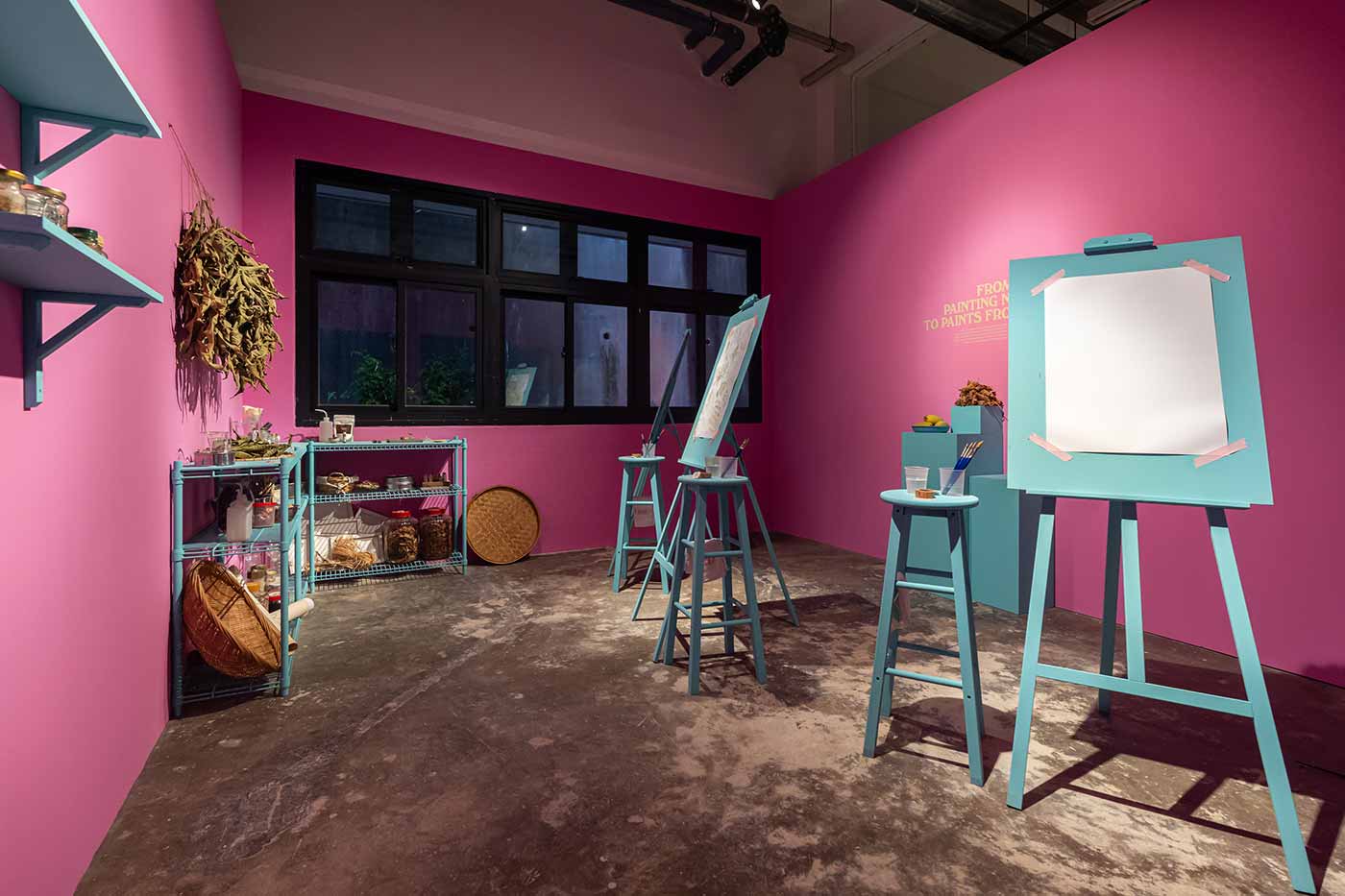
In the art classroom, visitors were encouraged to try their hand at painting with inks made from botanical waste such as fallen leaves and flowers. Some of the raw materials and ink-making tools were exhibited.
6PATIENT ZERO
Planet Earth wallowed in the sick bay, fighting a fever. On the wall, a medical poster identified the most common causes of this affliction: agriculture, livestock farming, deforestation, transportation, and manufacturing.
7LESSON IN DISASTER
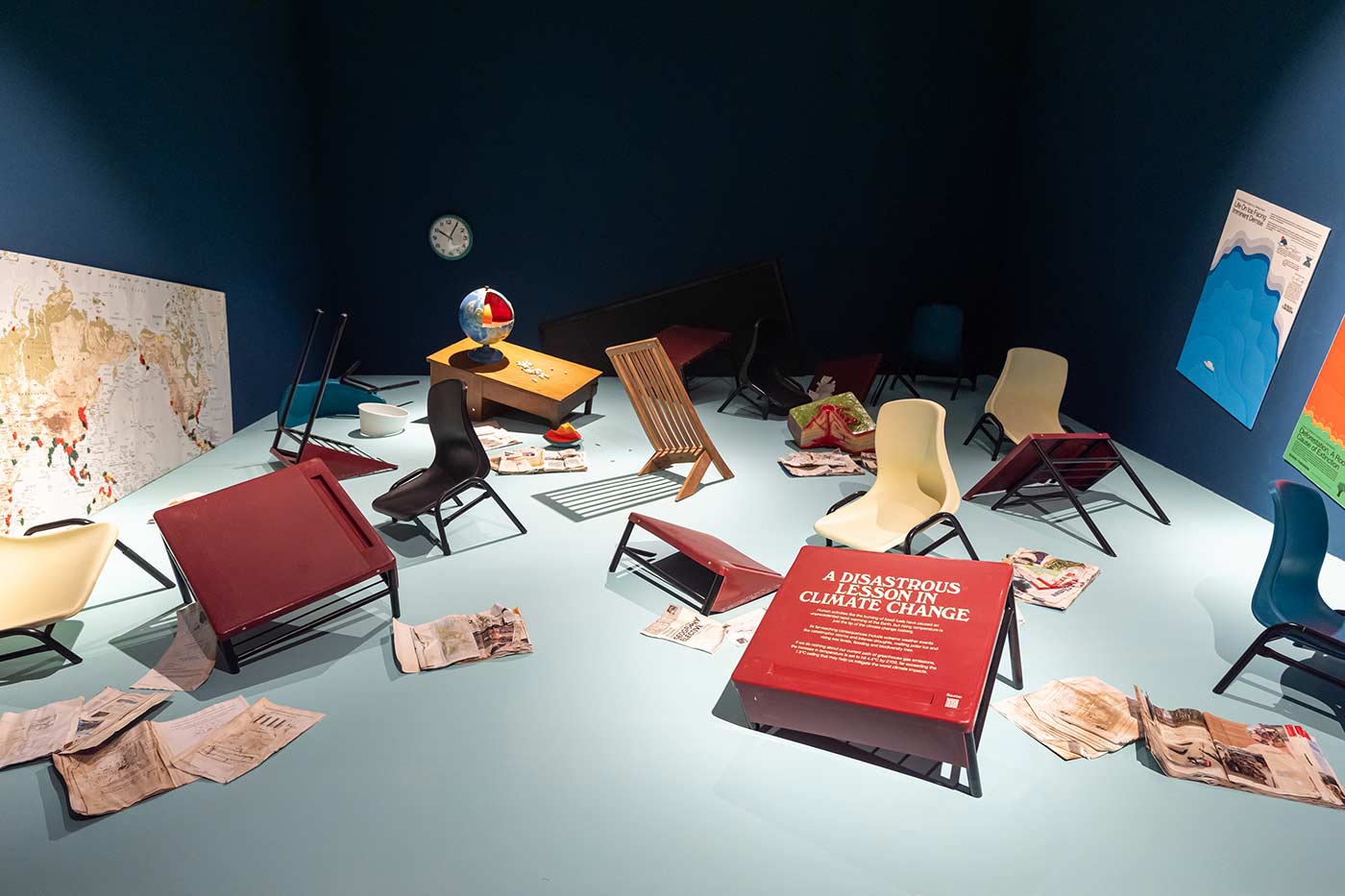
The geography class appeared to have been disrupted by flooding. The message of climate change was conveyed by partially submerged furniture, water-stained worksheets, and a sinking map of at-risk coastlines.
8ECOLOGICAL OVERSHOOT
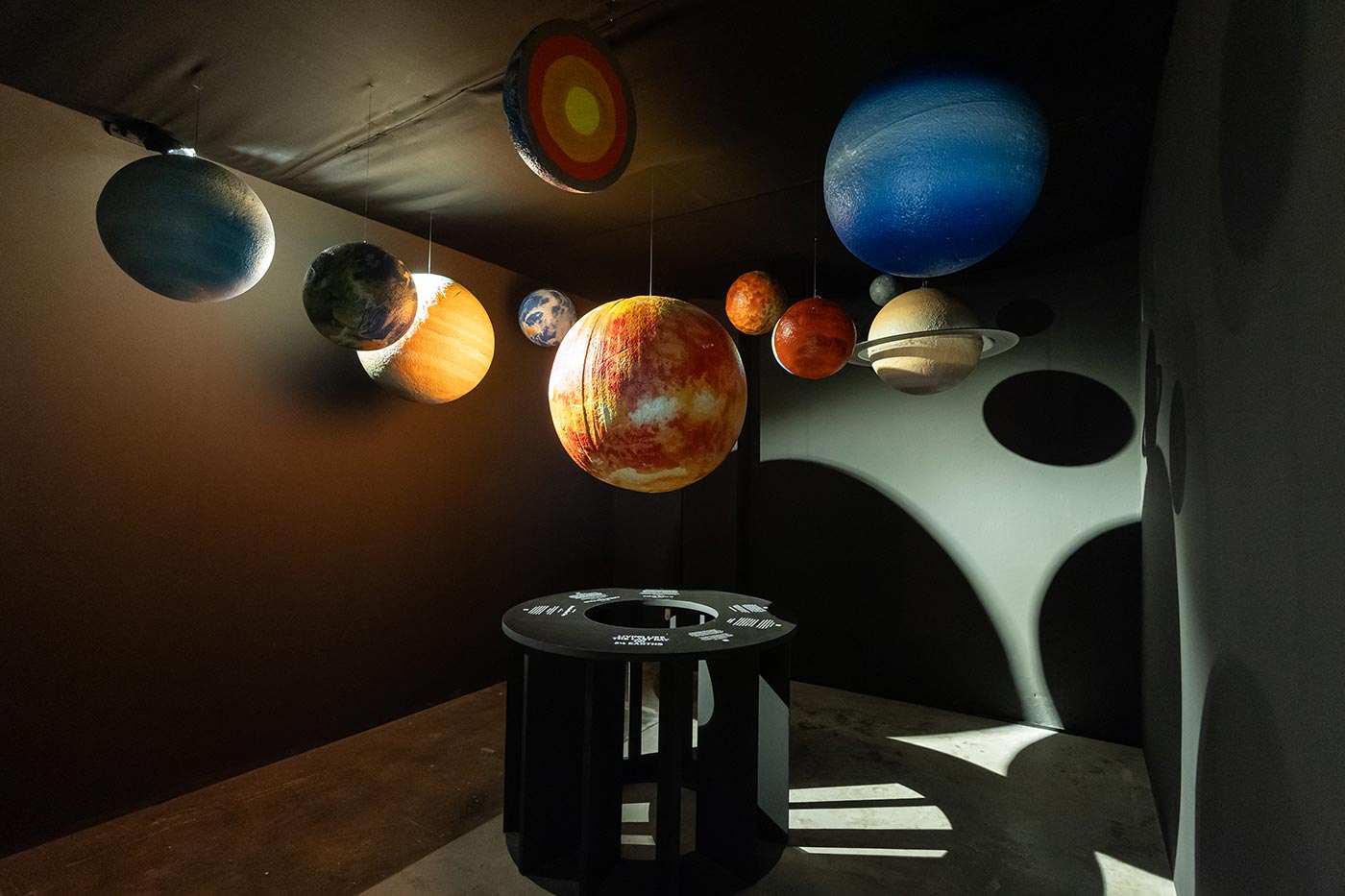
Astronomy was on the agenda in the physics classroom. There, a model of the solar system contained three and a half Earths, an indication of humanity’s catastrophic overconsumption of the planet’s resources.
9LEARNING JOURNEY
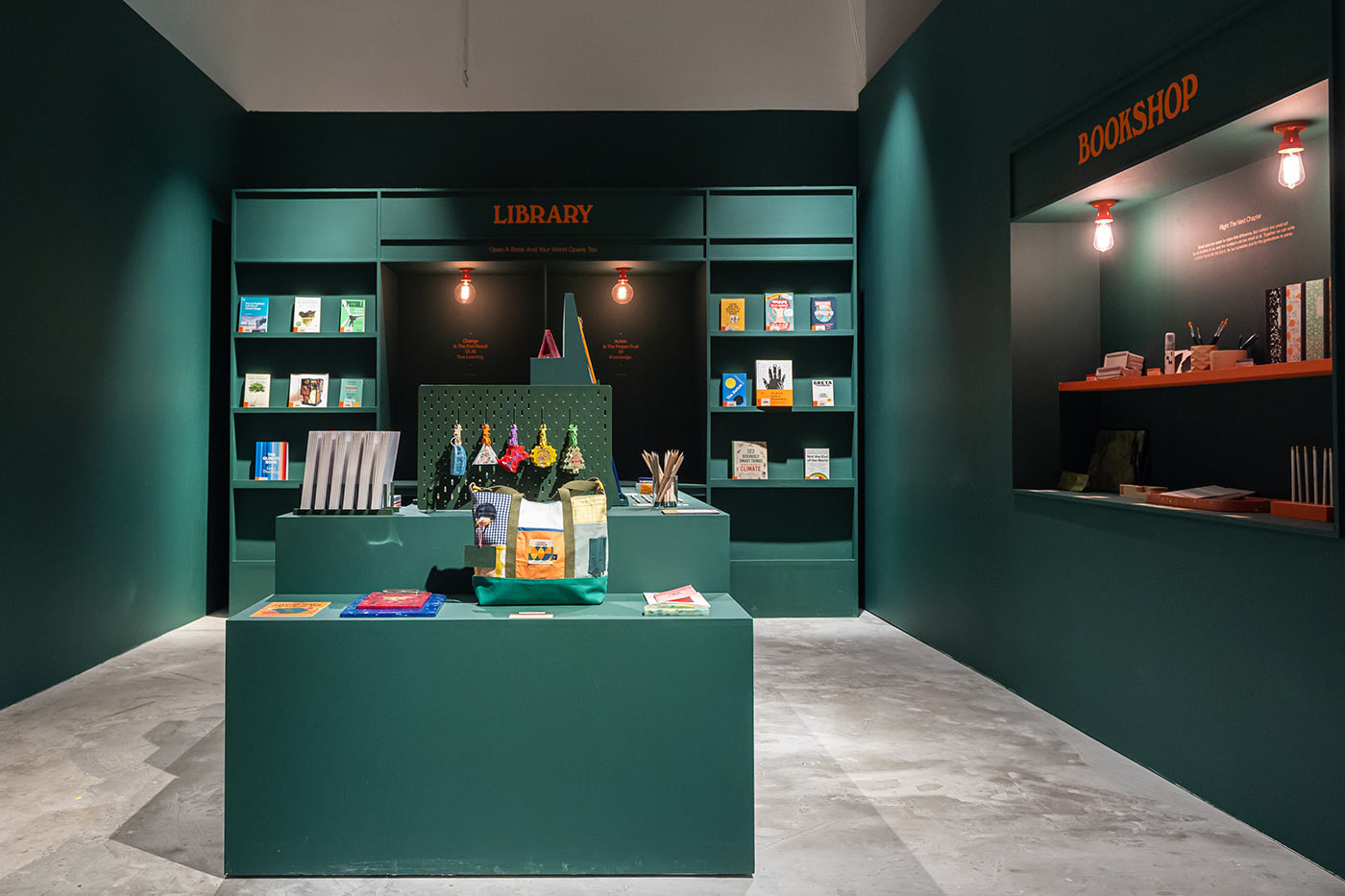
A school is not complete without a library and bookshop. School of Tomorrow encouraged ongoing learning with a selection of library books focused on climate and sustainability issues. Products included a school bag made from recycled fabric.
10SCORING FOR TEAM EARTH
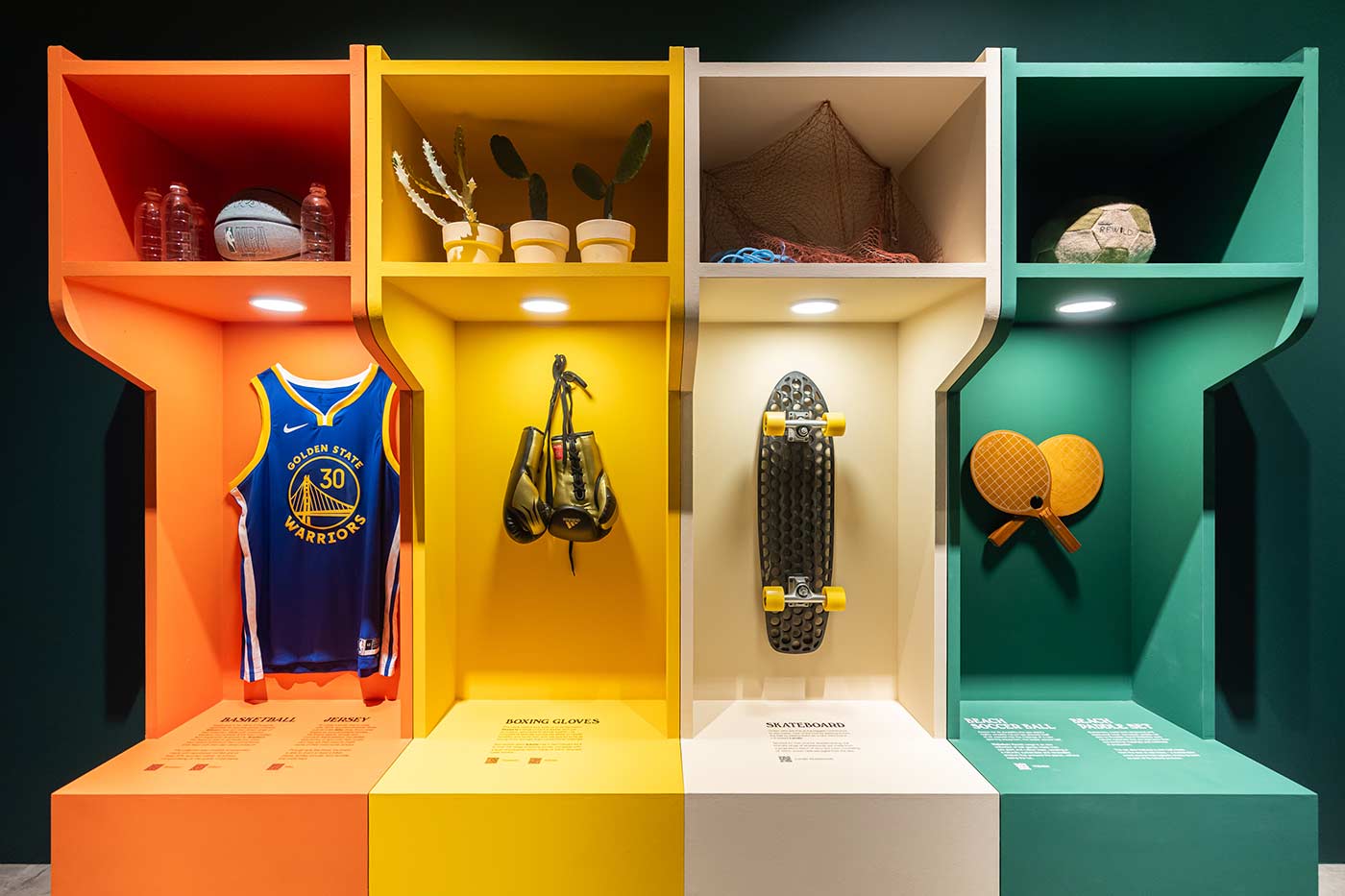
Physical education lockers showcased sporting equipment made from alternative materials such as boxing gloves made from cactus leather.
11EXPERIMENTAL APPROACH
Bioplastics and other bio-composite materials were presented in the science lab, along with illustrated instructions for making bioplastics through science experiments at home.
12CHALLENGING TASTEBUDS
The recycled plastic shelves in the school canteen were stocked with snacks ranging from mushroom jerky to roasted larvae, protein bars made from crickets, and more. Supporting information turned the display into a learning opportunity.
Insights from the Recipient
ASTRI NURSALIM (AN): The approach came from the graphic we developed for the exhibition. We wanted it to look bright and cheerful, which tallies with the overall message of School of Tomorrow. Rather than being preachy and scaring people with warnings of a grim future, we wanted the overall messaging to be hopeful. We wanted people to not only learn about the issues, but to see the solutions from our partners as well, so they would walk out of the exhibition feeling like they can contribute in many ways.
GIAN JONATHAN (GJ): Being in the visual communications industry, we were mindful about how we packaged School of Tomorrow. We needed to make environmental issues approachable so people would be willing to go in and interact with the exhibition. Although we added so-called packaging, the content was very real. We presented the problems as they are. We also presented current solutions as the small steps that we can take to tackle those issues.
PANN LIM (PL): Fun and light-hearted doesn’t mean frivolous. It’s about engaging people. The topic of sustainability is discussed over and over again and people might think, “Oh, it’s that same story again.” If we gave it a new spin that people would find engaging, they’d want to find out more.
GJ: School is something most people can relate to. Using school as a vehicle tied in very well with the overall concept, because it created an opportunity for learning about climate and environmental issues. We kept all the subjects you’d expect at school, but with a twist. In mathematics class, for example, you would learn how to calculate your carbon footprint and what you could do to offset it. It was familiar, but also not familiar.
PL: The first hurdle is making people stop to read. Then the rest will follow. We did not design School of Tomorrow as a place of teaching. Instead, we wanted to engage students on a journey of learning, because change can only come about when we internalise the lessons.
AN: The [Not-So] Convenience Store gave us a base of knowledge about how people are tackling issues. When we built that showcase, we had different touchpoints such as the jingle, the uniforms, and the various parts of the store. It was good groundwork for thinking about the different touchpoints the school could have.
PL: It comes back to the methodology of how we presented the project. The exterior format came first. The [Not-So] Convenience Store; firstly, what a name! Why is a convenience store inconvenient? That was the hook, and the whole design direction followed in the style of a convenience store. That premise already made it engaging.
Likewise, for School of Tomorrow, the school format was a vehicle for us to push the sustainability message. If you were to present a project about sustainability with the word “green” in the title, people would be more likely to think it might be boring. We looked for platforms that were more engaging. Once people go in and connect with the concept, you have engaged your audience.
There were also the more granular considerations. How do you lead visitors from Room A to B to C? How do you create a different experience in each room? How do you put a twist on the different curriculum subjects? Once people walk in, they need to feel that they’re within the experience, that they’re really in a school.
On top of that, we had very knowledgeable gallery sitters. We received a lot of feedback about this. They were all young people. We gave them a catalogue to read about the subject matter, but all of them went on and did further research. I overheard some of them talking to the visitors about their personal experiences as well. This is a topic close to their heart, so they wanted to put more into it. Actually, everyone who was involved in the project read up and contributed to our collective findings. None of us were trained in this subject but we all shared information.
AN: We started out by conceptualising the different subjects and deciding what each class would be about. Then we spent around six months conducting research online and talking to people who offer various solutionsto environmental problems, such as new materials. The whole Kinetic team was involved. We then went back to the content to consider whether there were other ways of structuring it.
PL: Yes, a key question was, “How do we present the content in a classroom format without being too boring?”
GJ: People shared valuable insights about the challenges associated with these new kinds of materials. While all of these materials are good, they sometimes lack aesthetic appeal. Not everything looks so nice. I recall one of the producers saying, “We have a good material, but designers are not using it in a way that makes it seem desirable.” Hence, they could not scale.
AN: We made merchandise for the second edition of School of Tomorrow so people could see the materials applied to products. Visitors could purchase the products to take home with them. Of course, we added our design touch too.
PL: We allowed people to touch the exhibits, so they could find out what cassava or seaweed plastic feel like. Some of those plastics are pretty fragile because they are still being researched and they haven’t achieved strength and durability yet. We had to replace them every two or three days. But we took this approach because we know that tactility is important.
In another part of the exhibition, people could participate by placing wireless tracking tokens on a chart to calculate their overall carbon footprint. In another area, we had textile replacements, such as pineapple fabric, that people could touch. I think that tactility contributed a lot to the overall experience.
We are part of this ongoing process of understanding the materials. Because they are new materials, they might not have undergone very rigorous testing yet. We are happy to be part of the process and learn along the way.
AN: We tried to make it as sustainable as we could. Almost all the props were second-hand.
PL: We also borrowed items from friends. We would only buy something new in circumstances where we couldn’t find it second-hand.
AN: For some items, we couldn’t find a viable alternative to a less sustainable material, so we took responsibility for their afterlife. After the second edition of School of Tomorrow, a preschool took the Styrofoam planets from our physics classroom to use as decorations. We had a public Google form to allow people to adopt items from the exhibition, and almost everything was taken.
After the exhibition closed, we reused some of the materials in our office. So now, when we host clients, we can show them a real-life application. The table and shelves in our conference room are examples.
PL: The other thing we tried to do was reduce energy consumption. We followed the National Environment Agency’s guideline for air conditioning. We set the temperature for the exhibition at 25oC, which is one or two degrees warmer than most people are used to. Some people mentioned that the place was not very cold, but we explained it as part of the exhibition narrative.
For the second edition, we needed to build more panels, so we worked with a builder who has projects within the photography and film industry. They came back afterwards to collect the panels so they could use them as backdrops.
GJ: Yes, it was a significant component. We identified social media as one of the channels for attracting people to the exhibition because it has wide reach and we could strategise different types of content to target different audience groups. We posted different content on social media, such as a quiz or homework that people could do. It served as an extension of the exhibition itself.
We did consider the photography aspect when we were designing the space. For example, we positioned a chair in the biology classroom so that visitors could take a photo of themselves studying there. We wanted to encourage people to spread the word. Of course, nowadays, if people enjoy something, they’ll share it on social media. So, we prepared our exhibition space to be social media-ready.
GJ: I really enjoyed seeing a group of preschoolers come to visit. You’re never too young to start learning. They had fun discovering new things, like how insects are an alternative source of protein. Experiences like eating bugs are really memorable.
AN: One of the preschools I hosted at the exhibition was the one that my child attends. It was very heartwarming for me to see their excitement and happy reactions to School of Tomorrow. Later on, when I went down to the preschool, the kids remembered me and called me “Mother Earth”! They wanted to tell me about all the solutions they remembered from the exhibition, like cassava plastic and mushrooms. I feel like we managed to speak to the future generations.
PL: What was most memorable for me was when someone from Bangkok came to see the exhibition after discovering it on social media. She was already enthusiastic about the topic and she wanted to find out more. I was happy to see this kind of traction.
AN: We’ve received a lot of enquiries, which has been really heartening. One of the major stumbling blocks is that the enquiries often come from countries where labour is cheaper, so it’s hard to balance costs. We hope to eventually move School of Tomorrow to an online space. We just want to keep it alive so it can continue to serve as a platform for education about these issues.
Citation
Jury Citation
Nominator Citation
David Lee Siew Bing
Lecturer, Design Communication, School of Design Communication,
LASALLE College of the Arts
School of Tomorrow goes beyond a conventional showcase of sustainability – it creates an engaging, inclusive, and thought- provoking learning environment. Rather than simply curating a collection of sustainable design practices, Kinetic took things a step further by building a school, ensuring their sustainability ethos was embedded in every aspect of the exhibition’s execution.
Their approach is playful, light-hearted, and accessible, making complex issues of sustainability more engaging for audiences of all ages, and stimulating deeper reflection on our impact on the planet. The exhibition is commendable not just for its message but also for the way it embodies its principles, demonstrating resourcefulness and careful attention to detail despite limited resources.
Kinetic’s ability to blend play, humour, and critical thinking into their work allows them to connect with audiences beyond traditional activism or design statements. This work is a testament to the power of design in shaping conversations about sustainability.
The School of Tomorrow exhibition, held at Selegie Arts Centre during Singapore Design Week 2023, was a pioneering initiative that underscored the critical role of education in driving sustainable change. This exhibition transcended traditional learning environments by reimagining core school subjects through the lens of sustainability, creating an impactful and immersive experience for the local community. Through innovative displays and interactive learning, School of Tomorrow educated, inspired, and empowered visitors – especially students – to understand and address pressing environmental challenges.
By blending the familiar framework of classroom education with cutting-edge sustainability concepts, the exhibition effectively engaged and transformed its audience’s perspectives. The exhibition’s nostalgic art direction was more than just a visual treat; it was a deliberate choice to connect deeply with the audience, evoking memories of school days, while challenging them to envision a future where sustainability is at the core of every lesson. From eco-friendly alternatives to plastic in biology class to a reimagined periodic table in chemistry, School of Tomorrow inspired visitors to reconsider their impact on the planet, making the lessons learned both memorable and transformative. The interplay of past and future not only captivated but also encouraged reflection on how far we’ve come and where we need to go.
Curated by Pann Lim and his team at Kinetic Singapore, the exhibition was not just about imparting knowledge but also about igniting a journey of learning that would resonate long after visitors left. As Lim put it, “School of Tomorrow starts by planting the seed of sustainability … the students are the ones who determine the kind of tomorrow we will see.”
For the local creative community, School of Tomorrow served as an inspiring call to action. Situated a stone’s throw away from LASALLE College of the Arts, Nanyang Academy of Fine Arts, and the School of the Arts, the site-specific exhibition transformed the mundane into the extraordinary, encouraging students to internalise lessons on sustainability in a way that was both engaging and accessible. By making complex environmental issues relatable through familiar educational frameworks, the exhibition empowered the next generation to take an active role in shaping a sustainable future.
In its ability to blend artistic nostalgia with forward-thinking design, while deeply impacting the local community, School of Tomorrow stands as a shining example of what design can achieve. It is a worthy contender for the President*s Design Award Design of the Year, exemplifying how thoughtful creative direction can inspire meaningful change at both a local and global level.